Trimaran or Catamaran? The Ultimate Guide for 2025 Buyers
By Gregor Tarjan, Founder of Aeroyacht.com
Author of “Catamarans: The Complete Guide for Cruising Sailors”
Whether you’re a seasoned offshore cruiser, a first-time multihull buyer, or a powerboater looking to make the switch, one question dominates the conversation in 2025: Trimaran or Catamaran—Which Is Right for You?
As the founder of Aeroyacht and someone who has been immersed in the multihull world for over three decades, I’ve had a front-row seat to the evolution of these remarkable vessels. I’ve authored several books, including Catamarans: The Complete Guide for Cruising Sailors, which has become a go-to reference for buyers around the world. And in that time, I’ve seen both technologies—cats and tris—explode with innovation, performance, and versatility.
Today’s multihull marketplace is more exciting (and more confusing) than ever. So, let’s break it down.
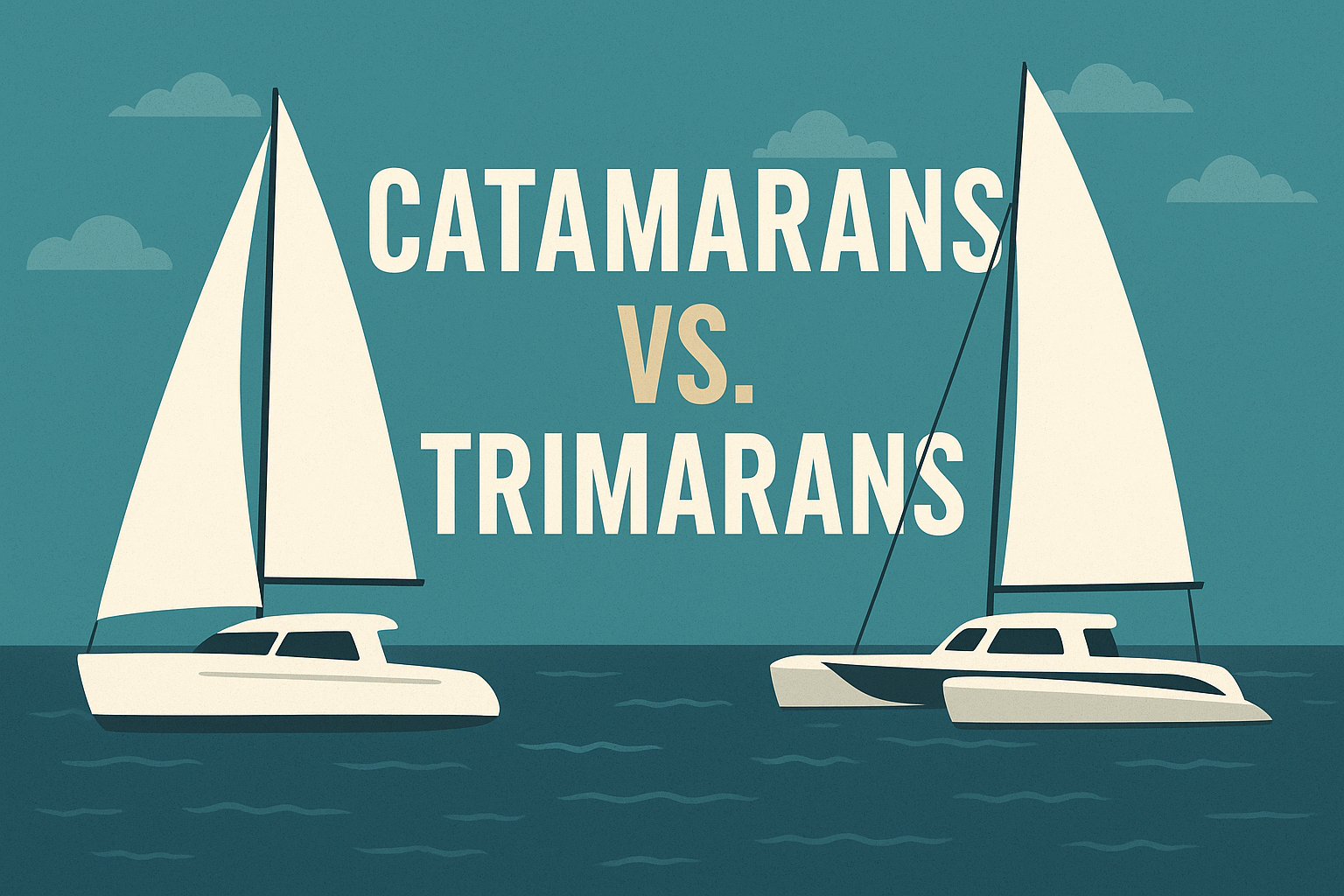
At the most basic level, catamarans have two hulls, generally of equal size, connected by a bridgedeck. Trimarans have three hulls: a central main hull with two smaller outer hulls (amas), connected by lateral beams. Both designs provide stability, speed, and living space well beyond traditional monohulls. But they offer slightly different performance characteristics, comfort levels, and mission profiles. Understanding those differences is key to making the right decision.
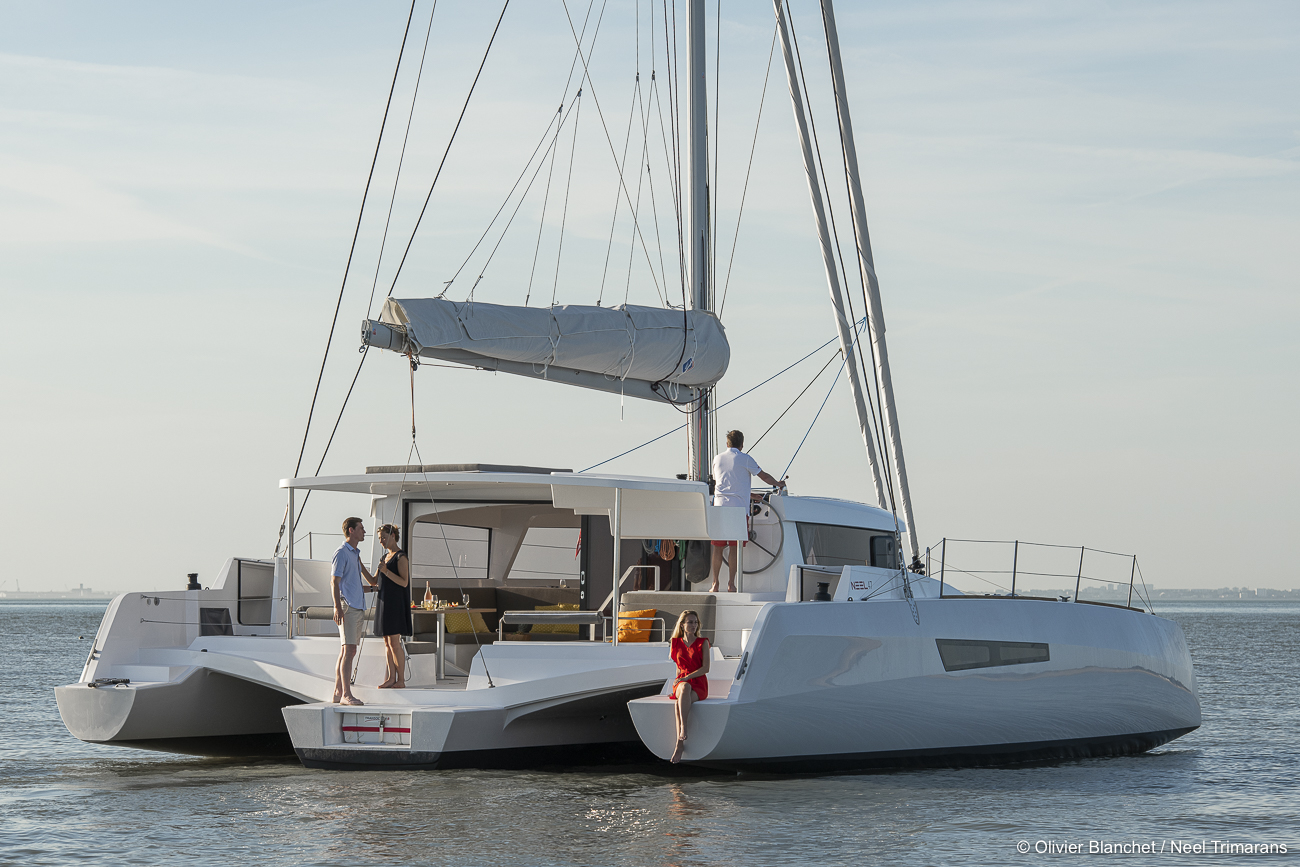
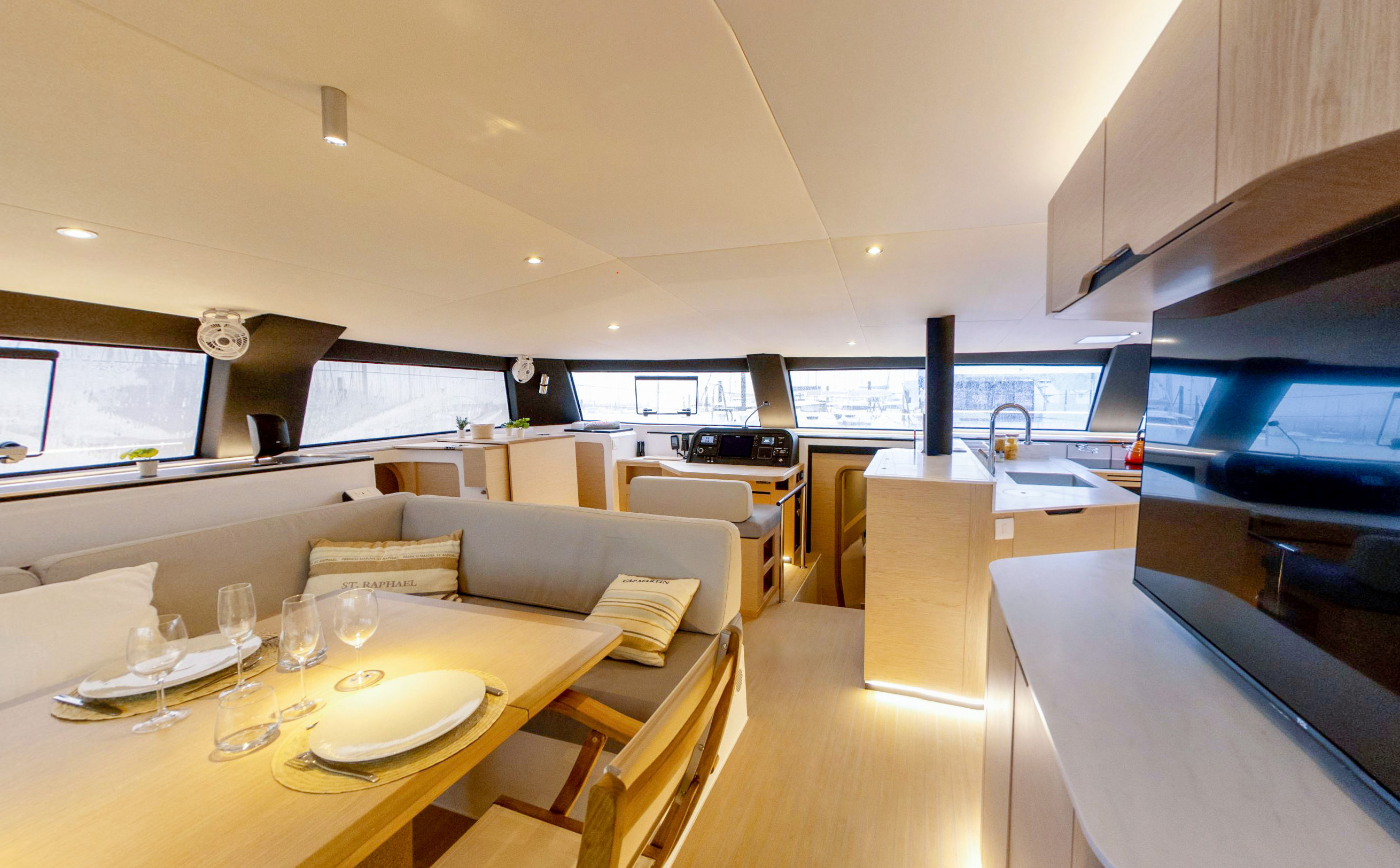
Catamarans have long dominated the liveaboard and charter scene—and for good reason. With their wide beam and dual hulls, they offer expansive salon spaces, wide cockpits, flybridges, and multiple cabins (often with queen or king beds in each hull). On models like the McConaghy 62 , this space feels positively palatial. By contrast, trimarans often have narrower central hulls, which slightly reduces interior volume. But modern tris like the NEEL 52 trimaran are changing that. Clever design—such as full standing headroom basements, main deck master suites, and flybridge lounging areas—means trimarans are catching up quickly on the comfort front. If maximum living space is your top priority, the catamaran still wins—but trimarans are nearly equal and closing the gap fast.
Performance is where trimarans shine. Because of their narrow central hull and reduced wetted surface, trimarans are generally faster and more efficient, especially upwind. They require less sail area to reach similar speeds and offer a smoother ride in rougher conditions thanks to their wave-piercing design. NEEL Trimarans, for instance, offers exceptional helm feel and agility. They appeals to sailors who want the thrill of real sailing combined with the reliability of a cruising platform. That said, the line between performance cats and tris has blurred. Boats like the McConaghy MC62 catamaran rival many trimarans in speed and can be faster off the wind, especially with modern sail plans and lightweight construction. But this comes usually at a much higher price, often 2-3 times more. So, trimarans generally win in upwind and all-around efficiency, while catamarans are excellent choices for performance cruisers who are willing to spend more, seeking high-tech options.
Motion comfort is another key consideration, especially for offshore sailors. Many people new to multihulls are concerned about “slamming” or choppy motion underway. Here again, trimarans have a big edge in rough seas. The narrow central hull rides through the waves, not over them, resulting in a smoother motion and less hobby-horsing. This can be a game-changer for seasickness-prone sailors or for long offshore passages. Catamarans, especially well-designed, performance oriented models like the new Nautitech 48 catamaran or McConaghy , handle waves comfortably too—though some models may experience more vertical motion in head seas. When it comes to safety, both vessel types offer tremendous redundancy, unsinkability, and stability. Trimaran amas add backup buoyancy and reduce capsize risk even further thanks to their wider beam. If safety is of paramount importance for offshore sailing, trimarans have the edge as there are at least twice as many watertight compartments that prevent sinking in case of a collission. For offshore comfort and motion in confused seas, trimarans have the upper hand.
One of the biggest trends in 2025 is sustainable cruising – and trimarans are leading the charge. The LEEN 56 Power and LEEN 72 Power, represented by Aeroyacht, are some of the world’s first long-range hybrid-electric trimarans, capable of crossing oceans on minimal fuel. Their diesel-electric systems, combined with lightweight hulls, allow for both silent motoring and impressive range. That said, new-generation power catamarans are also becoming more efficient, with options for solar, lithium battery banks, and low-drag hull shapes. Right now however, the LEEN trimaran leads in autonomous-hybrid cruising.
So who should choose what? You should consider a trimaran if you prioritize collission safety, performance and motion comfort offshore, are considering hybrid-electric propulsion, want a boat that feels more like sailing than motoring, and are comfortable with slightly larger beam. On the other hand, a catamaran is the better conventional choice if you’re cruising with family or entertaining frequently, want owner suites in the hulls, or are looking at resale in the charter market.
To go deeper into this topic – and many others – I invite you to call me or explore my books: Catamarans: The Complete Guide for Cruising Sailors, or Catamarans Tomorrows Superyachts. These guides are the culmination of my lifetime in this industry and are trusted by multihull owners, designers, and sailors around the world. They’re available on Amazon, Barnes & Noble, and via Kindle.
Whether you’re leaning toward a McConaghy performance cruiser or a LEEN hybrid trimaran, I at Aeroyacht am here to help. We’re not just brokers – we’re sailors, designers, and educators committed to helping you make the most informed decision possible. Contact me, and let’s get you on the water in the multihull that’s right for your dreams in 2025.